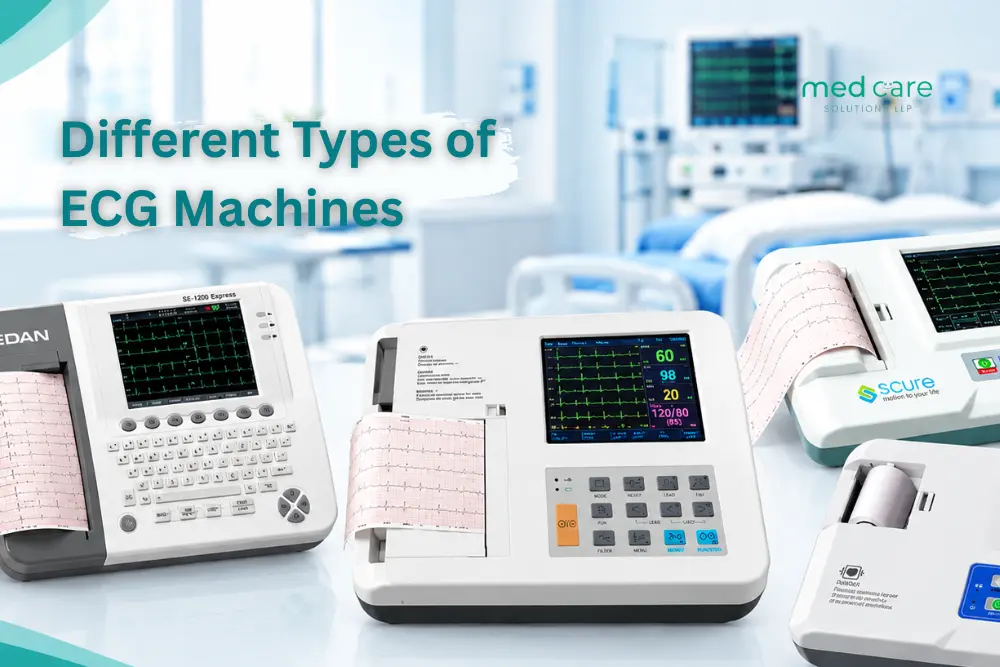
Understanding the Different Types of ECG Machines
Understanding the Different Types of ECG Machines
Understanding the Different Types of ECG Machines
An Electrocardiogram (ECG) is one of the most commonly used diagnostic tests for evaluating the electrical activity of the heart. ECG machines help healthcare professionals monitor heart rhythm, identify abnormalities, and support the diagnosis of various cardiac conditions.
With different types of ECG machines available today, choosing the right equipment depends on factors such as the healthcare facility, clinical requirements, portability, number of leads, and intended use.
In this guide, we explore the different types of ECG machines, their features, applications, and the factors to consider when selecting an ECG machine for a hospital, clinic, diagnostic centre, or healthcare facility.
What Is an ECG Machine?
An ECG machine is a medical device that records the electrical signals produced by the heart. Electrodes placed on specific areas of the patient's body detect these electrical signals and transmit them to the ECG device, which converts them into a waveform for analysis.
ECG machines are commonly used for:
Monitoring heart rhythm and rate
Detecting irregular heart rhythms
Identifying certain cardiac abnormalities
Supporting the assessment of chest pain
Monitoring patients with known heart conditions
Pre-operative cardiac assessments
Routine cardiovascular examinations
Depending on the type of ECG machine, the device may provide a short recording in a clinical setting or continuously monitor cardiac activity over an extended period.
Different Types of ECG Machines
1. Single-Channel ECG Machines
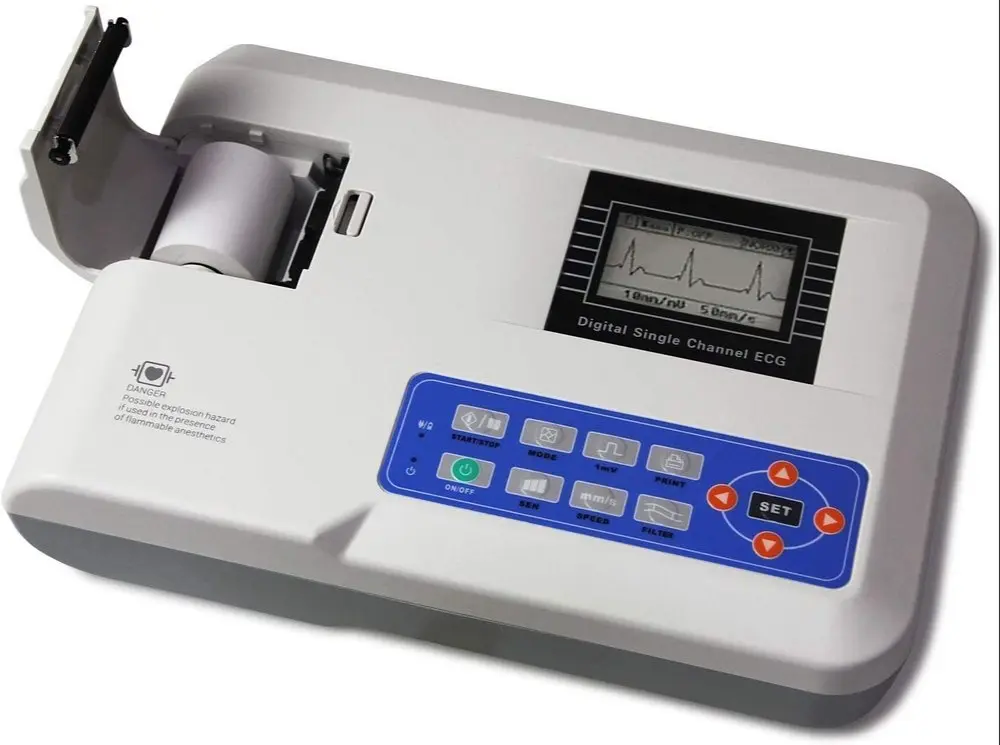
Single-channel ECG machines record one ECG signal at a time. They are generally compact and easy to operate, making them suitable for basic cardiac assessments and routine examinations.
Common applications include:
Small clinics
General medical practices
Basic cardiac screening
Portable examinations
Their compact design can make them convenient when portability and simplicity are important considerations.
2. 3-Channel ECG Machines
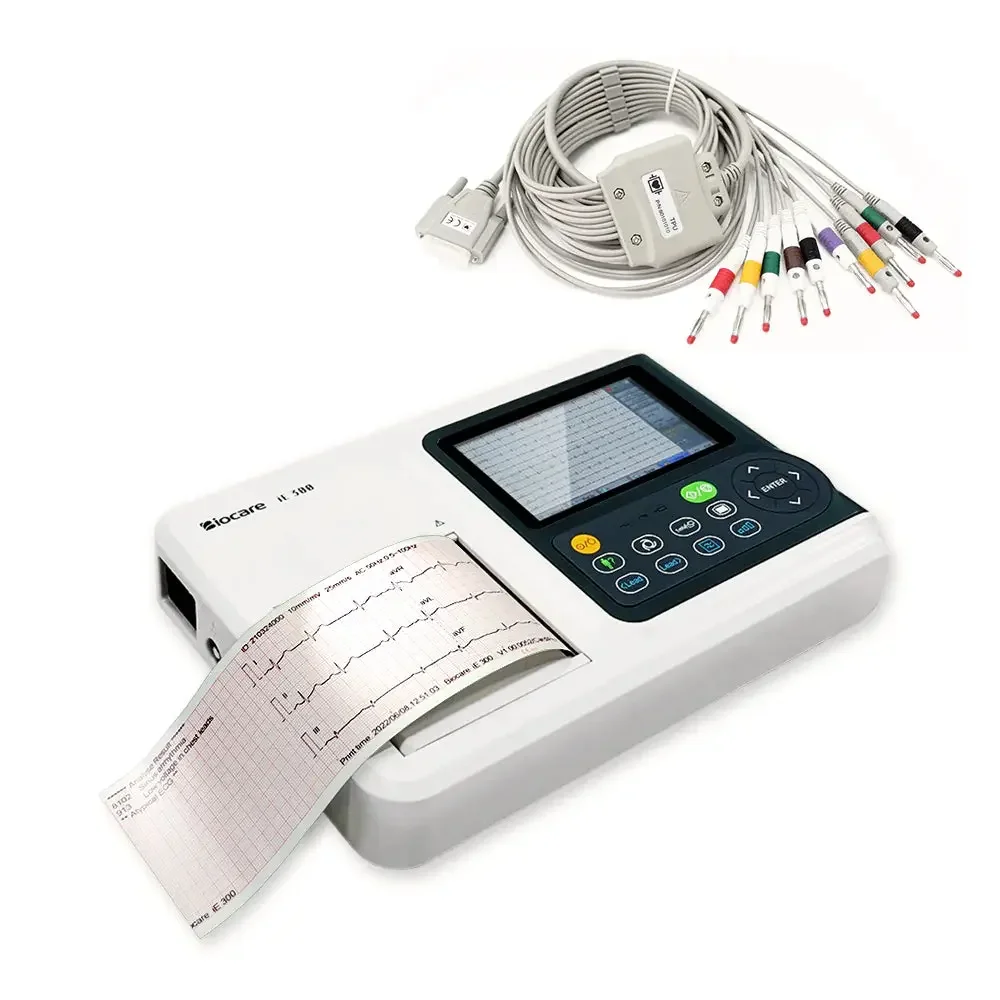
A 3-channel ECG machine can record multiple ECG signals simultaneously and generally provides more information than a basic single-channel device.
These machines are commonly used in clinics, hospitals, and diagnostic centres for routine ECG examinations. Many models also include features such as digital displays, built-in printers, patient data storage, and connectivity options.
3. 6-Channel ECG Machines
6-channel ECG machines record multiple leads simultaneously and can provide a more comprehensive ECG recording.
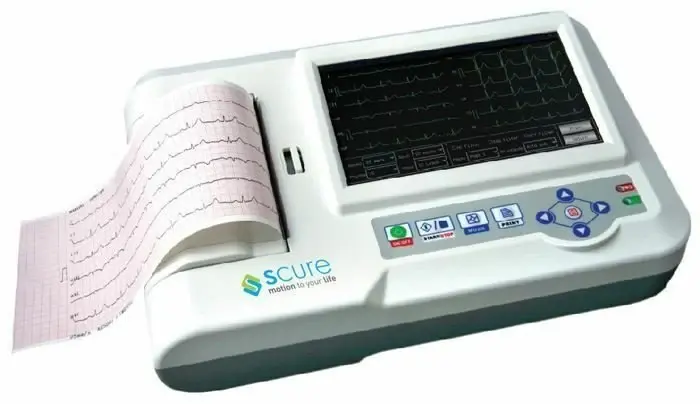
They are often used in hospitals, diagnostic centres, cardiology departments, and clinics where more detailed cardiac assessments are required.
Depending on the model, features may include:
Digital ECG display
Thermal printing
Patient data management
Internal memory
USB or network connectivity
Automated ECG analysis
4. 12-Channel ECG Machines
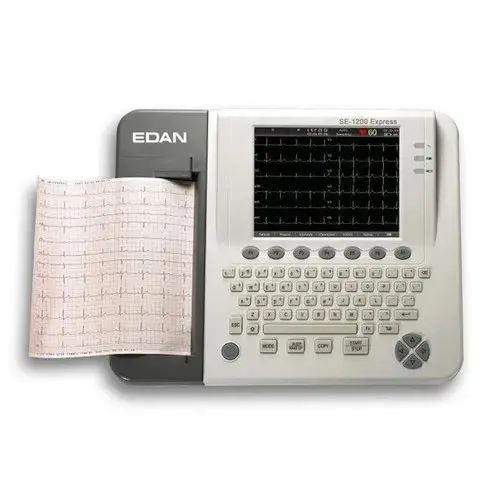
12-channel ECG machines are widely used in hospitals and diagnostic facilities because they provide a comprehensive recording of the heart's electrical activity from multiple leads.
They are commonly used for detailed cardiac assessments and can help healthcare professionals evaluate different aspects of cardiac electrical activity.
Modern 12-channel ECG machines may offer features such as:
High-resolution ECG recording
Automatic measurements
Interpretation assistance
Patient information management
Digital storage
External connectivity
Integrated printing
For hospitals and diagnostic centres that perform a high volume of ECG examinations, a 12-channel ECG machine can be an important part of their diagnostic equipment.
Resting ECG Machines
Resting ECG machines are designed to record the heart's electrical activity while the patient is at rest. This is one of the most common types of ECG testing performed in hospitals and clinics.
A resting ECG is typically completed within a few minutes and may be used as part of routine examinations, pre-operative assessments, or investigations of symptoms such as chest discomfort, palpitations, or dizziness.
These machines are available in different configurations, including 3-channel, 6-channel, and 12-channel systems.
Portable ECG Machines
Portable ECG machines are designed for healthcare professionals who need to perform ECG examinations in different locations.
Their compact size makes them useful for:
Emergency departments
Ambulances
Patient wards
Smaller clinics
Home healthcare
Remote healthcare settings
Portable ECG devices can help healthcare professionals obtain ECG recordings without requiring the patient to visit a dedicated diagnostic room.
Holter ECG Monitors
A Holter monitor is a portable ECG monitoring device designed to record heart activity continuously for an extended period, often 24 hours or longer depending on the clinical requirement and device.
Unlike a standard resting ECG, which captures cardiac activity for a short period, Holter monitoring can help record intermittent or recurring rhythm abnormalities that may not occur during a brief ECG examination.
Holter monitors are commonly used when patients experience symptoms such as:
Occasional palpitations
Unexplained dizziness
Fainting episodes
Intermittent irregular heartbeats
The recorded data can later be reviewed by healthcare professionals to identify patterns or abnormalities.
Stress ECG Machines
A stress ECG, also known as an exercise ECG or exercise stress test, records the heart's electrical activity while the patient exercises.
The ECG machine is typically connected to the patient while they exercise on equipment such as a treadmill or stationary bicycle. Heart rate, rhythm, and other relevant parameters can be monitored as the workload increases.
Stress ECG systems are commonly used in hospitals and cardiology departments as part of cardiac evaluation.
Wireless and Digital ECG Machines
Modern ECG technology has increasingly incorporated digital and wireless connectivity. These systems can allow ECG data to be stored electronically and transferred to computers, hospital information systems, or other compatible platforms.
Depending on the equipment, digital ECG systems may provide:
Electronic patient records
Data storage
Digital report generation
Connectivity with hospital systems
Easy access to previous ECG recordings
Reduced dependence on paper records
These features can improve the efficiency of ECG documentation and data management within healthcare facilities.
How to Choose the Right ECG Machine
Selecting an ECG machine should be based on the specific needs of the healthcare facility rather than simply choosing a device with the most features.
Consider the following factors:
1. Clinical Requirements
Determine what type of ECG examinations your facility regularly performs. A small clinic may have different requirements compared with a hospital cardiology department.
2. Number of Channels
Consider whether a single-channel, 3-channel, 6-channel, or 12-channel ECG system is appropriate for your workload and clinical requirements.
3. Portability
If ECG examinations need to be performed across different departments or locations, a lightweight and portable system may be beneficial.
4. Data Storage and Connectivity
Digital storage, USB connectivity, network integration, and compatibility with electronic medical records can be important for facilities that manage large amounts of patient data.
5. Printing and Reporting
Some ECG machines include integrated thermal printers and automated reporting functions. Consider whether these features are necessary for your workflow.
6. Ease of Use
An ECG machine should have an intuitive interface that allows trained healthcare professionals to perform examinations efficiently.
7. Maintenance and Technical Support
Reliable after-sales service, preventive maintenance, calibration, and technical support are important considerations when investing in medical equipment.
Why Proper ECG Machine Maintenance Matters
Regular maintenance can help keep ECG equipment operating reliably and producing consistent recordings. Healthcare facilities should follow the manufacturer's maintenance recommendations and ensure that the equipment is inspected by qualified technicians when required.
Routine checks may include:
Inspecting cables and electrodes
Checking the ECG display and printer
Examining connectors
Checking battery performance in portable devices
Verifying recording quality
Cleaning the equipment appropriately
Arranging professional servicing when necessary
If an ECG machine repeatedly produces poor-quality recordings, displays errors, or experiences hardware problems, professional inspection may be required.
Choosing an ECG Machine Supplier
The equipment itself is only one part of the purchasing decision. A reliable medical equipment supplier can also provide guidance on product selection, installation, maintenance, technical support, and servicing.
When choosing an ECG machine supplier in Kerala, healthcare facilities should consider:
Product quality and suitability
Technical support
Warranty and service options
Availability of spare parts
Maintenance and repair support
Supplier experience
After-sales service
Med Care Solutions LLP is a trusted medical equipment supplier in Kerala, providing reliable medical equipment and technical support to hospitals, clinics, diagnostic centres, and other healthcare facilities. With over 15 years of experience, Med Care Solutions focuses on supplying quality equipment along with dependable technical assistance and after-sales support.
Whether you are looking for an ECG machine for a hospital, clinic, or diagnostic centre, Med Care Solutions can help you identify equipment suited to your facility's clinical and operational requirements. We support extends beyond equipment supply, with repair, maintenance, and technical services designed to help healthcare facilities keep equipment performing reliably.
Contact: +91 799 436 8349 for more details.
Conclusion
ECG machines are available in a variety of configurations, from compact single-channel devices to advanced 12-channel systems, portable ECG devices, Holter monitors, and stress ECG systems. Each type serves different clinical and operational requirements.
Understanding the differences between ECG machines can help hospitals, clinics, and diagnostic centres make informed equipment decisions based on their workload, clinical applications, portability requirements, connectivity needs, and long-term service requirements.
For healthcare facilities looking for reliable ECG and medical equipment solutions in Kerala, working with an experienced supplier can provide access to suitable equipment along with technical support and maintenance services.
Med Care Solutions LLP provides medical equipment and technical support for hospitals, clinics, and diagnostic centres, helping healthcare facilities access dependable equipment solutions for their operational needs.
An Electrocardiogram (ECG) is one of the most commonly used diagnostic tests for evaluating the electrical activity of the heart. ECG machines help healthcare professionals monitor heart rhythm, identify abnormalities, and support the diagnosis of various cardiac conditions.
With different types of ECG machines available today, choosing the right equipment depends on factors such as the healthcare facility, clinical requirements, portability, number of leads, and intended use.
In this guide, we explore the different types of ECG machines, their features, applications, and the factors to consider when selecting an ECG machine for a hospital, clinic, diagnostic centre, or healthcare facility.
What Is an ECG Machine?
An ECG machine is a medical device that records the electrical signals produced by the heart. Electrodes placed on specific areas of the patient's body detect these electrical signals and transmit them to the ECG device, which converts them into a waveform for analysis.
ECG machines are commonly used for:
Monitoring heart rhythm and rate
Detecting irregular heart rhythms
Identifying certain cardiac abnormalities
Supporting the assessment of chest pain
Monitoring patients with known heart conditions
Pre-operative cardiac assessments
Routine cardiovascular examinations
Depending on the type of ECG machine, the device may provide a short recording in a clinical setting or continuously monitor cardiac activity over an extended period.
Different Types of ECG Machines
1. Single-Channel ECG Machines
Single-channel ECG machines record one ECG signal at a time. They are generally compact and easy to operate, making them suitable for basic cardiac assessments and routine examinations.
Common applications include:
Small clinics
General medical practices
Basic cardiac screening
Portable examinations
Their compact design can make them convenient when portability and simplicity are important considerations.
2. 3-Channel ECG Machines
A 3-channel ECG machine can record multiple ECG signals simultaneously and generally provides more information than a basic single-channel device.
These machines are commonly used in clinics, hospitals, and diagnostic centres for routine ECG examinations. Many models also include features such as digital displays, built-in printers, patient data storage, and connectivity options.
3. 6-Channel ECG Machines
6-channel ECG machines record multiple leads simultaneously and can provide a more comprehensive ECG recording.
They are often used in hospitals, diagnostic centres, cardiology departments, and clinics where more detailed cardiac assessments are required.
Depending on the model, features may include:
Digital ECG display
Thermal printing
Patient data management
Internal memory
USB or network connectivity
Automated ECG analysis
4. 12-Channel ECG Machines
12-channel ECG machines are widely used in hospitals and diagnostic facilities because they provide a comprehensive recording of the heart's electrical activity from multiple leads.
They are commonly used for detailed cardiac assessments and can help healthcare professionals evaluate different aspects of cardiac electrical activity.
Modern 12-channel ECG machines may offer features such as:
High-resolution ECG recording
Automatic measurements
Interpretation assistance
Patient information management
Digital storage
External connectivity
Integrated printing
For hospitals and diagnostic centres that perform a high volume of ECG examinations, a 12-channel ECG machine can be an important part of their diagnostic equipment.
Resting ECG Machines
Resting ECG machines are designed to record the heart's electrical activity while the patient is at rest. This is one of the most common types of ECG testing performed in hospitals and clinics.
A resting ECG is typically completed within a few minutes and may be used as part of routine examinations, pre-operative assessments, or investigations of symptoms such as chest discomfort, palpitations, or dizziness.
These machines are available in different configurations, including 3-channel, 6-channel, and 12-channel systems.
Portable ECG Machines
Portable ECG machines are designed for healthcare professionals who need to perform ECG examinations in different locations.
Their compact size makes them useful for:
Emergency departments
Ambulances
Patient wards
Smaller clinics
Home healthcare
Remote healthcare settings
Portable ECG devices can help healthcare professionals obtain ECG recordings without requiring the patient to visit a dedicated diagnostic room.
Holter ECG Monitors
A Holter monitor is a portable ECG monitoring device designed to record heart activity continuously for an extended period, often 24 hours or longer depending on the clinical requirement and device.
Unlike a standard resting ECG, which captures cardiac activity for a short period, Holter monitoring can help record intermittent or recurring rhythm abnormalities that may not occur during a brief ECG examination.
Holter monitors are commonly used when patients experience symptoms such as:
Occasional palpitations
Unexplained dizziness
Fainting episodes
Intermittent irregular heartbeats
The recorded data can later be reviewed by healthcare professionals to identify patterns or abnormalities.
Stress ECG Machines
A stress ECG, also known as an exercise ECG or exercise stress test, records the heart's electrical activity while the patient exercises.
The ECG machine is typically connected to the patient while they exercise on equipment such as a treadmill or stationary bicycle. Heart rate, rhythm, and other relevant parameters can be monitored as the workload increases.
Stress ECG systems are commonly used in hospitals and cardiology departments as part of cardiac evaluation.
Wireless and Digital ECG Machines
Modern ECG technology has increasingly incorporated digital and wireless connectivity. These systems can allow ECG data to be stored electronically and transferred to computers, hospital information systems, or other compatible platforms.
Depending on the equipment, digital ECG systems may provide:
Electronic patient records
Data storage
Digital report generation
Connectivity with hospital systems
Easy access to previous ECG recordings
Reduced dependence on paper records
These features can improve the efficiency of ECG documentation and data management within healthcare facilities.
How to Choose the Right ECG Machine
Selecting an ECG machine should be based on the specific needs of the healthcare facility rather than simply choosing a device with the most features.
Consider the following factors:
1. Clinical Requirements
Determine what type of ECG examinations your facility regularly performs. A small clinic may have different requirements compared with a hospital cardiology department.
2. Number of Channels
Consider whether a single-channel, 3-channel, 6-channel, or 12-channel ECG system is appropriate for your workload and clinical requirements.
3. Portability
If ECG examinations need to be performed across different departments or locations, a lightweight and portable system may be beneficial.
4. Data Storage and Connectivity
Digital storage, USB connectivity, network integration, and compatibility with electronic medical records can be important for facilities that manage large amounts of patient data.
5. Printing and Reporting
Some ECG machines include integrated thermal printers and automated reporting functions. Consider whether these features are necessary for your workflow.
6. Ease of Use
An ECG machine should have an intuitive interface that allows trained healthcare professionals to perform examinations efficiently.
7. Maintenance and Technical Support
Reliable after-sales service, preventive maintenance, calibration, and technical support are important considerations when investing in medical equipment.
Why Proper ECG Machine Maintenance Matters
Regular maintenance can help keep ECG equipment operating reliably and producing consistent recordings. Healthcare facilities should follow the manufacturer's maintenance recommendations and ensure that the equipment is inspected by qualified technicians when required.
Routine checks may include:
Inspecting cables and electrodes
Checking the ECG display and printer
Examining connectors
Checking battery performance in portable devices
Verifying recording quality
Cleaning the equipment appropriately
Arranging professional servicing when necessary
If an ECG machine repeatedly produces poor-quality recordings, displays errors, or experiences hardware problems, professional inspection may be required.
Choosing an ECG Machine Supplier
The equipment itself is only one part of the purchasing decision. A reliable medical equipment supplier can also provide guidance on product selection, installation, maintenance, technical support, and servicing.
When choosing an ECG machine supplier in Kerala, healthcare facilities should consider:
Product quality and suitability
Technical support
Warranty and service options
Availability of spare parts
Maintenance and repair support
Supplier experience
After-sales service
Med Care Solutions LLP is a trusted medical equipment supplier in Kerala, providing reliable medical equipment and technical support to hospitals, clinics, diagnostic centres, and other healthcare facilities. With over 15 years of experience, Med Care Solutions focuses on supplying quality equipment along with dependable technical assistance and after-sales support.
Whether you are looking for an ECG machine for a hospital, clinic, or diagnostic centre, Med Care Solutions can help you identify equipment suited to your facility's clinical and operational requirements. We support extends beyond equipment supply, with repair, maintenance, and technical services designed to help healthcare facilities keep equipment performing reliably.
Contact: +91 799 436 8349 for more details.
Conclusion
ECG machines are available in a variety of configurations, from compact single-channel devices to advanced 12-channel systems, portable ECG devices, Holter monitors, and stress ECG systems. Each type serves different clinical and operational requirements.
Understanding the differences between ECG machines can help hospitals, clinics, and diagnostic centres make informed equipment decisions based on their workload, clinical applications, portability requirements, connectivity needs, and long-term service requirements.
For healthcare facilities looking for reliable ECG and medical equipment solutions in Kerala, working with an experienced supplier can provide access to suitable equipment along with technical support and maintenance services.
Med Care Solutions LLP provides medical equipment and technical support for hospitals, clinics, and diagnostic centres, helping healthcare facilities access dependable equipment solutions for their operational needs.
Get Started Today
Reliable Service You Can Trust
Fast, certified repair, maintenance, and refurbishment for ultrasound systems and probes.
100% ISO Certified
98% Client Satisfaction
99% On-Time Delivery
Join 500+ healthcare facilities trusting Med Care Solutions
Get Started Today
Reliable Service You Can Trust
Fast, certified repair, maintenance, and refurbishment for ultrasound systems and probes.
100% ISO Certified
98% Client Satisfaction
99% On-Time Delivery
Join 500+ healthcare facilities trusting Med Care Solutions
Get Started Today
Reliable Service You Can Trust
Fast, certified repair, maintenance, and refurbishment for ultrasound systems and probes.
100% ISO Certified
98% Client Satisfaction
99% On-Time Delivery
Join 500+ healthcare facilities trusting Med Care Solutions