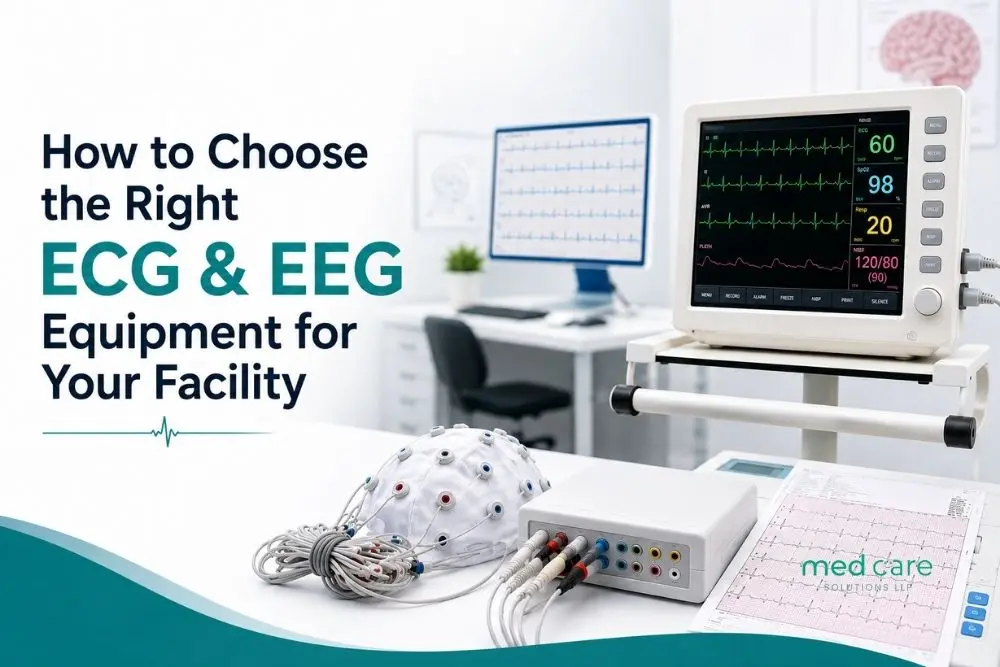
How to Choose the Right ECG and EEG Equipment for Your Healthcare Facility
How to Choose the Right ECG and EEG Equipment for Your Healthcare Facility
How to Choose the Right ECG and EEG Equipment for Your Healthcare Facility
Choosing the right medical equipment is an important decision for hospitals, clinics, diagnostic centres, and other healthcare facilities. ECG and EEG machines are widely used for monitoring cardiac and neurological activity, so selecting equipment that matches your facility's clinical requirements is essential.
With different models, features, configurations, and price ranges available, healthcare providers should consider more than just the initial purchase cost. The right equipment should provide reliable performance, ease of use, appropriate functionality, and dependable service support.
Here are some important factors to consider when choosing ECG and EEG equipment for your healthcare facility.
1. Understand Your Clinical Requirements
The first step is to identify how the equipment will be used.
An ECG machine records the electrical activity of the heart and is commonly used for cardiac assessment and monitoring. An EEG machine records electrical activity in the brain and is primarily used for neurological evaluation.
Before purchasing, consider:
The type of tests performed regularly
Number of patients expected
Departments that will use the equipment
Required diagnostic capabilities
Whether the equipment will be used for routine or specialised testing
Available space in the facility
Understanding these requirements will help you choose equipment that is appropriate for your actual workload.
2. Consider the Type of ECG Machine
ECG machines are available in different configurations. For example, a basic ECG machine may be suitable for routine examinations in a clinic, while a more advanced system may be better suited to hospitals and diagnostic centres with higher patient volumes.
When comparing ECG machines, consider features such as:
Number of channels
Display quality
Automatic ECG interpretation
Data storage
Printing options
Connectivity and data transfer
Portability
Battery operation
The right configuration depends on the clinical needs and workflow of your facility.
3. Evaluate EEG Machine Features
EEG equipment also comes in different configurations designed for different clinical applications. Healthcare facilities should consider the number of channels, recording capabilities, software functionality, connectivity, and accessories required for their intended use.
Depending on the application, features such as digital recording, waveform review, data storage, video integration, and specialised analysis software may be important.
It is essential to choose an EEG system that provides the functionality required by the healthcare professionals who will operate it.
4. Prioritise Accuracy and Reliability
Accuracy is one of the most important factors when selecting diagnostic equipment. ECG and EEG machines need to capture electrical signals clearly and consistently.
Look for equipment from reputable medical equipment suppliers with appropriate technical specifications and quality standards. Reliable equipment can support healthcare professionals in obtaining consistent recordings and reducing technical interruptions.
5. Choose Equipment That Is Easy to Operate
Medical equipment should fit naturally into the workflow of the healthcare facility.
A complicated interface can increase training requirements and potentially slow down routine procedures. Look for ECG and EEG systems with:
User-friendly controls
Clear displays
Intuitive software
Simple patient data entry
Easy report generation
Straightforward maintenance procedures
Equipment that is easy for trained staff to operate can improve efficiency and workflow.
6. Check Connectivity and Data Management
Modern healthcare facilities increasingly rely on digital records and connected medical devices. When choosing ECG or EEG equipment, consider how easily the system can store, transfer, and manage patient data.
Depending on your facility's requirements, useful features may include:
USB or network connectivity
Digital data storage
Electronic report generation
Computer integration
Data export capabilities
Compatibility with existing healthcare information systems
Before purchasing, confirm that the equipment's connectivity features are compatible with your existing infrastructure.
7. Consider Portability
Portability can be an important consideration for hospitals with multiple departments or facilities that perform examinations at the patient's bedside.
If the equipment needs to be moved frequently, consider factors such as:
Device size
Weight
Battery life
Ease of transportation
Durability
For fixed diagnostic departments, a larger system with additional functionality may be more suitable.
8. Consider the Total Cost of Ownership
The purchase price is only one part of the overall cost of medical equipment. Healthcare facilities should also consider the long-term costs associated with operating and maintaining the equipment.
These may include:
Installation
Training
Consumables
Accessories
Software updates
Preventive maintenance
Repairs
Replacement components
A slightly more expensive machine may offer better long-term value if it provides reliable performance and strong service support.
9. Check Warranty and After-Sales Support
Reliable after-sales service is particularly important for medical equipment. Even quality equipment may eventually require maintenance, calibration, troubleshooting, or repair.
Before purchasing, ask about:
Warranty coverage
Service availability
Preventive maintenance
Technical support
Availability of replacement parts
Repair turnaround time
Choosing a supplier that provides dependable technical support can help reduce downtime when equipment requires attention.
10. Consider Future Requirements
Healthcare facilities can grow and their diagnostic requirements can change over time. Choosing equipment only for current needs may result in limitations later.
Consider whether the ECG or EEG system can support future requirements through additional features, software upgrades, accessories, or connectivity options.
Planning for future needs can help your facility avoid replacing equipment prematurely.
11. Compare Suppliers Carefully
The equipment itself is important, but the supplier also plays a significant role in the overall purchasing experience.
When comparing ECG and EEG equipment suppliers, look at:
Product quality
Manufacturer reputation
Technical expertise
Installation support
Training
Warranty
Maintenance services
Repair support
Customer service
A reliable supplier can provide assistance before and after the purchase, helping your healthcare facility get the most from its investment.
ECG and EEG Equipment for Your Healthcare Facility
Choosing the right ECG and EEG equipment requires careful consideration of your facility's clinical needs, patient volume, workflow, budget, technical requirements, and long-term service needs.
Rather than choosing equipment based solely on price, healthcare facilities should focus on quality, reliability, functionality, ease of use, and after-sales support. The right equipment can support efficient diagnostic services while providing healthcare professionals with dependable tools for their clinical work.
Med Care Solutions provides medical equipment solutions for hospitals, clinics, diagnostic centres, and healthcare facilities. If you are looking for ECG or EEG equipment in Kerala, selecting the right system with appropriate technical and service support can help ensure a reliable long-term investment.
Looking for reliable ECG and EEG equipment for your healthcare facility? Contact Med Care Solutions to discuss your requirements.
Choosing the right medical equipment is an important decision for hospitals, clinics, diagnostic centres, and other healthcare facilities. ECG and EEG machines are widely used for monitoring cardiac and neurological activity, so selecting equipment that matches your facility's clinical requirements is essential.
With different models, features, configurations, and price ranges available, healthcare providers should consider more than just the initial purchase cost. The right equipment should provide reliable performance, ease of use, appropriate functionality, and dependable service support.
Here are some important factors to consider when choosing ECG and EEG equipment for your healthcare facility.
1. Understand Your Clinical Requirements
The first step is to identify how the equipment will be used.
An ECG machine records the electrical activity of the heart and is commonly used for cardiac assessment and monitoring. An EEG machine records electrical activity in the brain and is primarily used for neurological evaluation.
Before purchasing, consider:
The type of tests performed regularly
Number of patients expected
Departments that will use the equipment
Required diagnostic capabilities
Whether the equipment will be used for routine or specialised testing
Available space in the facility
Understanding these requirements will help you choose equipment that is appropriate for your actual workload.
2. Consider the Type of ECG Machine
ECG machines are available in different configurations. For example, a basic ECG machine may be suitable for routine examinations in a clinic, while a more advanced system may be better suited to hospitals and diagnostic centres with higher patient volumes.
When comparing ECG machines, consider features such as:
Number of channels
Display quality
Automatic ECG interpretation
Data storage
Printing options
Connectivity and data transfer
Portability
Battery operation
The right configuration depends on the clinical needs and workflow of your facility.
3. Evaluate EEG Machine Features
EEG equipment also comes in different configurations designed for different clinical applications. Healthcare facilities should consider the number of channels, recording capabilities, software functionality, connectivity, and accessories required for their intended use.
Depending on the application, features such as digital recording, waveform review, data storage, video integration, and specialised analysis software may be important.
It is essential to choose an EEG system that provides the functionality required by the healthcare professionals who will operate it.
4. Prioritise Accuracy and Reliability
Accuracy is one of the most important factors when selecting diagnostic equipment. ECG and EEG machines need to capture electrical signals clearly and consistently.
Look for equipment from reputable medical equipment suppliers with appropriate technical specifications and quality standards. Reliable equipment can support healthcare professionals in obtaining consistent recordings and reducing technical interruptions.
5. Choose Equipment That Is Easy to Operate
Medical equipment should fit naturally into the workflow of the healthcare facility.
A complicated interface can increase training requirements and potentially slow down routine procedures. Look for ECG and EEG systems with:
User-friendly controls
Clear displays
Intuitive software
Simple patient data entry
Easy report generation
Straightforward maintenance procedures
Equipment that is easy for trained staff to operate can improve efficiency and workflow.
6. Check Connectivity and Data Management
Modern healthcare facilities increasingly rely on digital records and connected medical devices. When choosing ECG or EEG equipment, consider how easily the system can store, transfer, and manage patient data.
Depending on your facility's requirements, useful features may include:
USB or network connectivity
Digital data storage
Electronic report generation
Computer integration
Data export capabilities
Compatibility with existing healthcare information systems
Before purchasing, confirm that the equipment's connectivity features are compatible with your existing infrastructure.
7. Consider Portability
Portability can be an important consideration for hospitals with multiple departments or facilities that perform examinations at the patient's bedside.
If the equipment needs to be moved frequently, consider factors such as:
Device size
Weight
Battery life
Ease of transportation
Durability
For fixed diagnostic departments, a larger system with additional functionality may be more suitable.
8. Consider the Total Cost of Ownership
The purchase price is only one part of the overall cost of medical equipment. Healthcare facilities should also consider the long-term costs associated with operating and maintaining the equipment.
These may include:
Installation
Training
Consumables
Accessories
Software updates
Preventive maintenance
Repairs
Replacement components
A slightly more expensive machine may offer better long-term value if it provides reliable performance and strong service support.
9. Check Warranty and After-Sales Support
Reliable after-sales service is particularly important for medical equipment. Even quality equipment may eventually require maintenance, calibration, troubleshooting, or repair.
Before purchasing, ask about:
Warranty coverage
Service availability
Preventive maintenance
Technical support
Availability of replacement parts
Repair turnaround time
Choosing a supplier that provides dependable technical support can help reduce downtime when equipment requires attention.
10. Consider Future Requirements
Healthcare facilities can grow and their diagnostic requirements can change over time. Choosing equipment only for current needs may result in limitations later.
Consider whether the ECG or EEG system can support future requirements through additional features, software upgrades, accessories, or connectivity options.
Planning for future needs can help your facility avoid replacing equipment prematurely.
11. Compare Suppliers Carefully
The equipment itself is important, but the supplier also plays a significant role in the overall purchasing experience.
When comparing ECG and EEG equipment suppliers, look at:
Product quality
Manufacturer reputation
Technical expertise
Installation support
Training
Warranty
Maintenance services
Repair support
Customer service
A reliable supplier can provide assistance before and after the purchase, helping your healthcare facility get the most from its investment.
ECG and EEG Equipment for Your Healthcare Facility
Choosing the right ECG and EEG equipment requires careful consideration of your facility's clinical needs, patient volume, workflow, budget, technical requirements, and long-term service needs.
Rather than choosing equipment based solely on price, healthcare facilities should focus on quality, reliability, functionality, ease of use, and after-sales support. The right equipment can support efficient diagnostic services while providing healthcare professionals with dependable tools for their clinical work.
Med Care Solutions provides medical equipment solutions for hospitals, clinics, diagnostic centres, and healthcare facilities. If you are looking for ECG or EEG equipment in Kerala, selecting the right system with appropriate technical and service support can help ensure a reliable long-term investment.
Looking for reliable ECG and EEG equipment for your healthcare facility? Contact Med Care Solutions to discuss your requirements.
Get Started Today
Reliable Service You Can Trust
Fast, certified repair, maintenance, and refurbishment for ultrasound systems and probes.
100% ISO Certified
98% Client Satisfaction
99% On-Time Delivery
Join 500+ healthcare facilities trusting Med Care Solutions
Get Started Today
Reliable Service You Can Trust
Fast, certified repair, maintenance, and refurbishment for ultrasound systems and probes.
100% ISO Certified
98% Client Satisfaction
99% On-Time Delivery
Join 500+ healthcare facilities trusting Med Care Solutions
Get Started Today
Reliable Service You Can Trust
Fast, certified repair, maintenance, and refurbishment for ultrasound systems and probes.
100% ISO Certified
98% Client Satisfaction
99% On-Time Delivery
Join 500+ healthcare facilities trusting Med Care Solutions