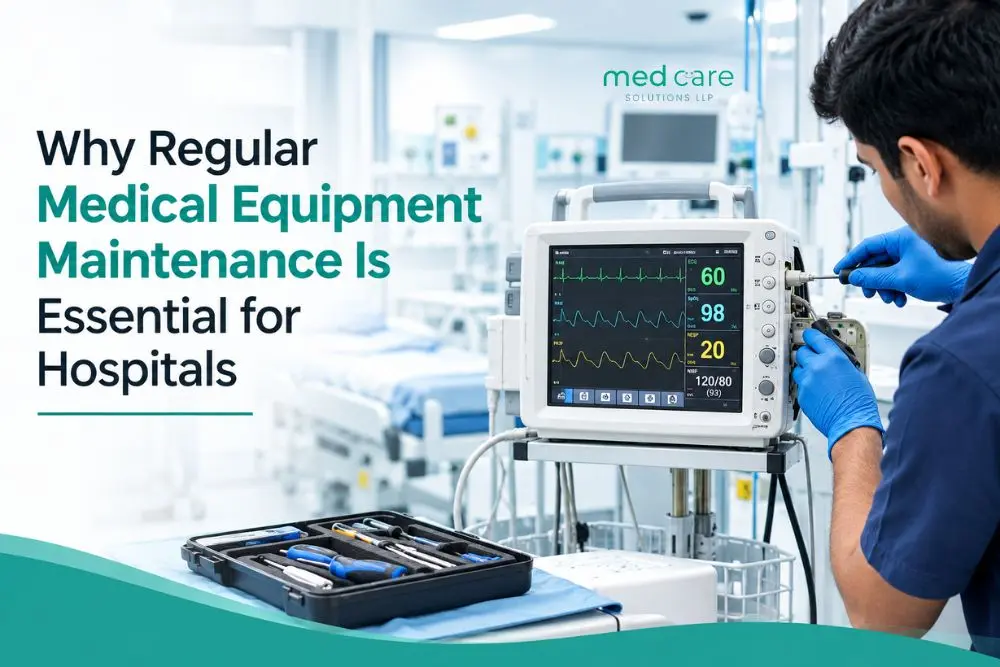
Why Regular Medical Equipment Maintenance Is Essential for Hospitals
Why Regular Medical Equipment Maintenance Is Essential for Hospitals
Why Regular Medical Equipment Maintenance Is Essential for Hospitals
Medical equipment plays a vital role in modern healthcare. From ECG and EEG machines to ultrasound systems, patient monitors, ventilators, and diagnostic equipment, hospitals depend on these devices for accurate diagnosis, effective treatment, and continuous patient monitoring.
However, even high-quality medical equipment can experience wear and performance issues over time. Regular medical equipment maintenance helps hospitals keep their equipment safe, reliable, and operational while reducing the risk of unexpected breakdowns.
What Is Medical Equipment Maintenance?
Medical equipment maintenance involves regular inspection, testing, servicing, calibration, cleaning, and repair of healthcare equipment. Maintenance can be performed as part of a scheduled preventive maintenance program or when a device develops a technical problem.
A proper maintenance plan helps identify potential issues before they become major equipment failures.
Why Is Regular Medical Equipment Maintenance Important?
1. Ensures Accurate Equipment Performance
Medical equipment must provide accurate and consistent results. Even a minor technical issue can affect the performance of diagnostic devices and potentially influence clinical decisions.
Regular inspection and calibration help ensure that equipment such as ECG machines, EEG machines, ultrasound systems, patient monitors, and other diagnostic devices continues to perform as expected.
2. Reduces Unexpected Equipment Breakdowns
Equipment failure can disrupt hospital operations and delay essential procedures. Preventive maintenance allows technicians to identify worn components, electrical issues, damaged cables, and other potential problems before they lead to unexpected breakdowns.
This helps hospitals maintain a more reliable healthcare environment.
3. Improves Patient Safety
Patient safety should always be a priority in healthcare facilities. Faulty or poorly maintained equipment can create risks for both patients and healthcare professionals.
Regular servicing and safety checks help ensure that medical devices remain in suitable working condition and meet required operational standards.
4. Extends Equipment Lifespan
Medical equipment represents a significant investment for hospitals and diagnostic centres. Proper maintenance can help extend the usable life of expensive equipment.
Regular cleaning, inspection, calibration, and timely repair can prevent minor problems from developing into major component failures, helping healthcare facilities get greater value from their equipment.
5. Reduces Long-Term Repair Costs
Ignoring small equipment problems can eventually result in expensive repairs or complete equipment replacement.
For example, addressing an early technical issue with an ultrasound probe or ECG machine may be considerably more practical than waiting until the equipment becomes completely unusable.
A preventive maintenance approach can therefore help hospitals manage their equipment-related expenses more effectively.
6. Minimises Hospital Downtime
Hospital departments often depend on medical equipment throughout the day. When an important device suddenly stops working, appointments, diagnostic procedures, and treatments may be delayed.
Scheduled maintenance helps identify potential problems in advance, allowing repairs to be planned with minimal disruption to hospital operations.
Common Medical Equipment That Requires Regular Maintenance
Almost every type of medical equipment can benefit from scheduled inspection and servicing. Some commonly maintained equipment includes:
Ultrasound systems
Ultrasound probes
Patient monitors
Defibrillators
Infusion pumps
Ventilators
Laboratory equipment
Diagnostic imaging equipment
Surgical equipment
Other electronic medical devices
The maintenance requirements can vary depending on the equipment type, manufacturer, usage frequency, and operating environment.
Preventive Maintenance vs. Corrective Maintenance
Hospitals generally require both preventive maintenance and corrective maintenance.
Preventive maintenance is performed at scheduled intervals to identify and prevent potential problems before equipment fails.
Corrective maintenance is performed when equipment has already developed a fault or stopped functioning properly.
While corrective repair is sometimes unavoidable, relying only on breakdown repairs can increase downtime and operational costs. A preventive maintenance program helps hospitals take a more proactive approach.
Signs That Medical Equipment May Need Servicing
Hospitals should not wait for equipment to completely fail before arranging professional inspection. Some warning signs include:
Unusual sounds or vibrations
Inconsistent or inaccurate readings
Frequent error messages
Poor image quality
Equipment overheating
Damaged cables or connectors
Intermittent operation
Slow or irregular performance
Visible physical damage
Frequent breakdowns
If any of these issues appear, the equipment should be inspected by a qualified service professional.
How Often Should Medical Equipment Be Maintained?
There is no single maintenance schedule that applies to every medical device. The recommended frequency depends on factors such as the equipment type, manufacturer recommendations, frequency of use, operating conditions, and previous service history.
Hospitals should follow the manufacturer's maintenance guidelines and maintain proper service records for their equipment.
Why Choose Professional Medical Equipment Repair Services?
Medical equipment is highly specialised, and improper servicing can potentially cause further damage or affect equipment performance. Professional technicians can inspect the device, identify the underlying issue, perform necessary repairs, and test its functionality.
For hospitals and diagnostic centres, working with a reliable medical equipment repair and maintenance service provider can make equipment management more efficient and dependable.
Maintain Your Medical Equipment for Better Healthcare
Regular maintenance is not simply about preventing equipment breakdowns. It is an important part of maintaining patient safety, diagnostic accuracy, operational efficiency, and equipment longevity.
Hospitals that follow a structured maintenance program can identify problems early, reduce unnecessary downtime, extend equipment lifespan, and keep essential medical devices performing reliably.
If your hospital or healthcare facility requires medical equipment repair and maintenance in Kerala, Med Care Solutions can help with dependable servicing solutions tailored to your equipment and operational requirements.
Need professional medical equipment repair or maintenance support? Contact Med Care Solutions to discuss your requirements.
Medical equipment plays a vital role in modern healthcare. From ECG and EEG machines to ultrasound systems, patient monitors, ventilators, and diagnostic equipment, hospitals depend on these devices for accurate diagnosis, effective treatment, and continuous patient monitoring.
However, even high-quality medical equipment can experience wear and performance issues over time. Regular medical equipment maintenance helps hospitals keep their equipment safe, reliable, and operational while reducing the risk of unexpected breakdowns.
What Is Medical Equipment Maintenance?
Medical equipment maintenance involves regular inspection, testing, servicing, calibration, cleaning, and repair of healthcare equipment. Maintenance can be performed as part of a scheduled preventive maintenance program or when a device develops a technical problem.
A proper maintenance plan helps identify potential issues before they become major equipment failures.
Why Is Regular Medical Equipment Maintenance Important?
1. Ensures Accurate Equipment Performance
Medical equipment must provide accurate and consistent results. Even a minor technical issue can affect the performance of diagnostic devices and potentially influence clinical decisions.
Regular inspection and calibration help ensure that equipment such as ECG machines, EEG machines, ultrasound systems, patient monitors, and other diagnostic devices continues to perform as expected.
2. Reduces Unexpected Equipment Breakdowns
Equipment failure can disrupt hospital operations and delay essential procedures. Preventive maintenance allows technicians to identify worn components, electrical issues, damaged cables, and other potential problems before they lead to unexpected breakdowns.
This helps hospitals maintain a more reliable healthcare environment.
3. Improves Patient Safety
Patient safety should always be a priority in healthcare facilities. Faulty or poorly maintained equipment can create risks for both patients and healthcare professionals.
Regular servicing and safety checks help ensure that medical devices remain in suitable working condition and meet required operational standards.
4. Extends Equipment Lifespan
Medical equipment represents a significant investment for hospitals and diagnostic centres. Proper maintenance can help extend the usable life of expensive equipment.
Regular cleaning, inspection, calibration, and timely repair can prevent minor problems from developing into major component failures, helping healthcare facilities get greater value from their equipment.
5. Reduces Long-Term Repair Costs
Ignoring small equipment problems can eventually result in expensive repairs or complete equipment replacement.
For example, addressing an early technical issue with an ultrasound probe or ECG machine may be considerably more practical than waiting until the equipment becomes completely unusable.
A preventive maintenance approach can therefore help hospitals manage their equipment-related expenses more effectively.
6. Minimises Hospital Downtime
Hospital departments often depend on medical equipment throughout the day. When an important device suddenly stops working, appointments, diagnostic procedures, and treatments may be delayed.
Scheduled maintenance helps identify potential problems in advance, allowing repairs to be planned with minimal disruption to hospital operations.
Common Medical Equipment That Requires Regular Maintenance
Almost every type of medical equipment can benefit from scheduled inspection and servicing. Some commonly maintained equipment includes:
Ultrasound systems
Ultrasound probes
Patient monitors
Defibrillators
Infusion pumps
Ventilators
Laboratory equipment
Diagnostic imaging equipment
Surgical equipment
Other electronic medical devices
The maintenance requirements can vary depending on the equipment type, manufacturer, usage frequency, and operating environment.
Preventive Maintenance vs. Corrective Maintenance
Hospitals generally require both preventive maintenance and corrective maintenance.
Preventive maintenance is performed at scheduled intervals to identify and prevent potential problems before equipment fails.
Corrective maintenance is performed when equipment has already developed a fault or stopped functioning properly.
While corrective repair is sometimes unavoidable, relying only on breakdown repairs can increase downtime and operational costs. A preventive maintenance program helps hospitals take a more proactive approach.
Signs That Medical Equipment May Need Servicing
Hospitals should not wait for equipment to completely fail before arranging professional inspection. Some warning signs include:
Unusual sounds or vibrations
Inconsistent or inaccurate readings
Frequent error messages
Poor image quality
Equipment overheating
Damaged cables or connectors
Intermittent operation
Slow or irregular performance
Visible physical damage
Frequent breakdowns
If any of these issues appear, the equipment should be inspected by a qualified service professional.
How Often Should Medical Equipment Be Maintained?
There is no single maintenance schedule that applies to every medical device. The recommended frequency depends on factors such as the equipment type, manufacturer recommendations, frequency of use, operating conditions, and previous service history.
Hospitals should follow the manufacturer's maintenance guidelines and maintain proper service records for their equipment.
Why Choose Professional Medical Equipment Repair Services?
Medical equipment is highly specialised, and improper servicing can potentially cause further damage or affect equipment performance. Professional technicians can inspect the device, identify the underlying issue, perform necessary repairs, and test its functionality.
For hospitals and diagnostic centres, working with a reliable medical equipment repair and maintenance service provider can make equipment management more efficient and dependable.
Maintain Your Medical Equipment for Better Healthcare
Regular maintenance is not simply about preventing equipment breakdowns. It is an important part of maintaining patient safety, diagnostic accuracy, operational efficiency, and equipment longevity.
Hospitals that follow a structured maintenance program can identify problems early, reduce unnecessary downtime, extend equipment lifespan, and keep essential medical devices performing reliably.
If your hospital or healthcare facility requires medical equipment repair and maintenance in Kerala, Med Care Solutions can help with dependable servicing solutions tailored to your equipment and operational requirements.
Need professional medical equipment repair or maintenance support? Contact Med Care Solutions to discuss your requirements.
Get Started Today
Reliable Service You Can Trust
Fast, certified repair, maintenance, and refurbishment for ultrasound systems and probes.
100% ISO Certified
98% Client Satisfaction
99% On-Time Delivery
Join 500+ healthcare facilities trusting Med Care Solutions
Get Started Today
Reliable Service You Can Trust
Fast, certified repair, maintenance, and refurbishment for ultrasound systems and probes.
100% ISO Certified
98% Client Satisfaction
99% On-Time Delivery
Join 500+ healthcare facilities trusting Med Care Solutions
Get Started Today
Reliable Service You Can Trust
Fast, certified repair, maintenance, and refurbishment for ultrasound systems and probes.
100% ISO Certified
98% Client Satisfaction
99% On-Time Delivery
Join 500+ healthcare facilities trusting Med Care Solutions